




Description
Basic Information About This Product
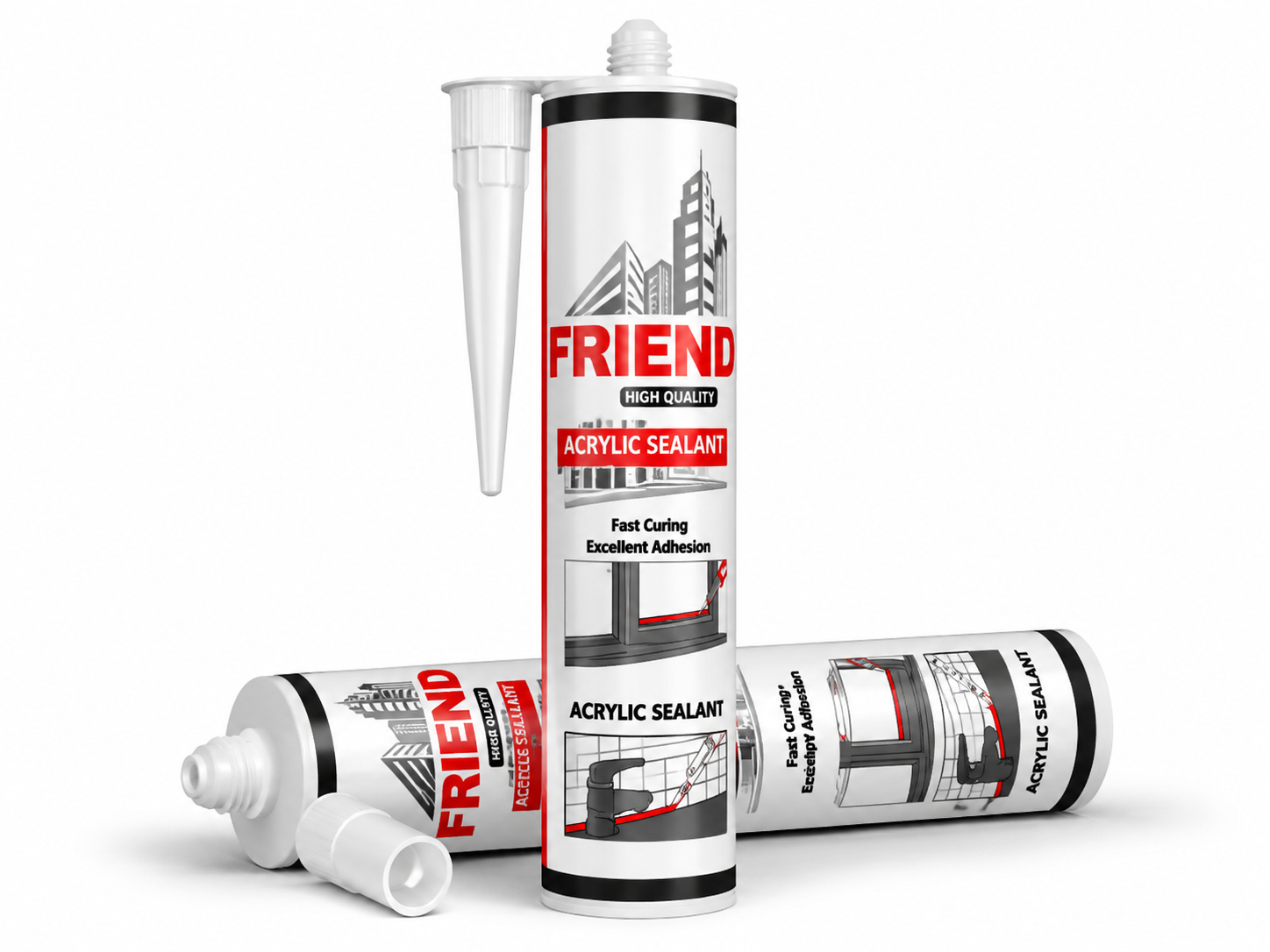
- Composition: Siliconized Acrylic Sealant consists of high-quality acrylic components and carefully selected additives, giving it flexibility and the ability to expand and contract with temperature changes.
- Uses: It is used to fill gaps and cracks in walls, ceilings, floors, kitchens, windows, and shutters. It is also suitable for both indoor and outdoor applications.
- Advantages:
- High Flexibility: Remains flexible after drying, helping to withstand minor movements in buildings and areas of use.
- Easy Application: Can be easily applied using simple tools like a manual gun.
- Weather Resistance: Withstands various weather conditions such as humidity, rain, and sunlight.
- Paintable: Can be painted after drying to match the surrounding surface color.
- Drying Time: The drying period varies depending on the layer thickness, temperature, and humidity, usually between 24 to 48 hours.
- Non-Toxic Composition: Most acrylic sealants are made from non-toxic materials, making them safe for indoor use, ensuring not to ingest the material or let it come in contact with eyes and wounds, while using safety measures.
- Low Emissions: Features low emissions of volatile organic compounds (VOCs), minimizing its impact on indoor air quality.
- Mold Resistance: Some types contain mold and mildew-resistant materials, making them ideal for use in damp areas like bathrooms and kitchens.
- Easy Cleaning: Any leftover or excess material can easily be cleaned with water and soap before it dries, making the application process safer and cleaner.
- Application: Ensure the surface is clean before application for good adhesion. The sealant is applied to the gaps and cracks using a caulking gun and smoothed with an appropriate tool.
Steps for Optimal Use of Acrylic Sealant
- Surface Preparation:
- Ensure the surface is clean, dry, and free from dust, oils, and grease.
- Remove any old paint or sealant using an appropriate tool.
- Tape Application (Optional):
- If you want clean edges, place tape on both sides of the gap or crack.
- Sealant Application:
- Cut the tip of the tube at a 45-degree angle using a sharp knife.
- Insert the tube into a caulking gun and apply the sealant into the gap or crack.
- Ensure the gap is fully filled with sealant.
- Smoothing the Sealant:
- Use a smoothing tool (such as a plastic spatula or a finger dipped in soapy water) to level the sealant and ensure even distribution.
- Remove the tape before the sealant dries for clean edges.
- Cleaning:
- Clean tools and any excess sealant with warm water and soap before it dries.
- Drying:
- Allow the sealant to dry completely. The drying period varies depending on the layer thickness, temperature, and humidity, typically ranging from 24 to 48 hours.
- After drying, the sealant can be painted to match the surrounding surface color.


Reviews
There are no reviews yet.