




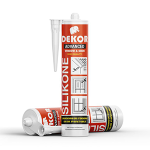
Description
Overview of Different Types of Silicone Sealant
- Acetoxy Silicone
- Properties: It has a strong vinegar-like smell due to the acetic acid released during curing.
- Uses: Suitable for areas not sensitive to acidic materials, such as glass, ceramics, and some metals.
- Neutral Cure Silicone
- Properties: Emits no strong odors during curing, making it ideal for indoor use.
- Uses: Widely used in applications where non-corrosive properties are required, such as on aluminum, stainless steel, and plastic.
- Advantages: Offers excellent adhesion and high resistance to weather conditions and moisture.
Silicone Sealant Colors
- Clear: Used when it’s important for the adhesive to be invisible, such as in glass and artistic projects.
- White: Commonly used in kitchens and bathrooms to match most sanitary fixtures.
- Black: Used in applications requiring a matte finish or where the surface is prone to getting dirty.
- Grey: Suitable for industrial and construction applications where it matches the color of concrete and metals.
Uses of Silicone Sealant
- Construction: Ideal for sealing gaps and cracks in buildings to prevent water and air leakage.
- Household Repairs: Perfect for fixing cracks in kitchens and bathrooms, and for securing sinks and toilets.
- Industries: Used in electronics industries to protect components from moisture and dust.
Advantages of Silicone Sealant
- Water Resistance: Prevents water seepage, making it ideal for damp environments.
- High Flexibility: Remains flexible even after curing, allowing it to accommodate expansion and contraction in materials.
- Heat Resistance: Can withstand high temperatures, making it suitable for areas exposed to heat.
Steps for Proper Application of Silicone Sealant
- Surface Preparation:
- Ensure the surface is clean, dry, and free from dust and debris.
- Use an appropriate cleaner to remove any oils or grease that may affect adhesion.
- Preparing the Sealant:
- Cut the nozzle of the silicone tube at a 45-degree angle to create a suitable opening.
- Insert the tube into a silicone gun and adjust it properly.
- Application:
- Slowly and steadily press the trigger to apply the silicone along the gap or crack.
- Try to maintain a continuous, even flow of silicone.
- Smoothing:
- Use a finger moistened with water or a smoothing tool to evenly distribute the silicone and ensure the gap is fully filled.
- For clean edges, you can apply masking tape on both sides of the gap and remove it before the silicone dries.
- Drying:
- Allow the silicone to dry completely, which may take between 24 and 48 hours depending on the type of silicone, temperature, and humidity in the area.
Additional Tips
- Ventilation: Work in a well-ventilated area to avoid inhaling fumes.
- Cleaning: Clean your tools and hands immediately after use with wipes or an appropriate cleaner.
Common Uses of Silicone Sealant
- Sealing gaps in bathrooms and kitchens: To prevent water leaks.
- Fixing windows and doors: For improved thermal and sound insulation.
- Art and décor projects: To secure glass and small components.
This versatile and durable adhesive is widely regarded for its long-lasting effectiveness in both household and industrial applications.


Reviews
There are no reviews yet.